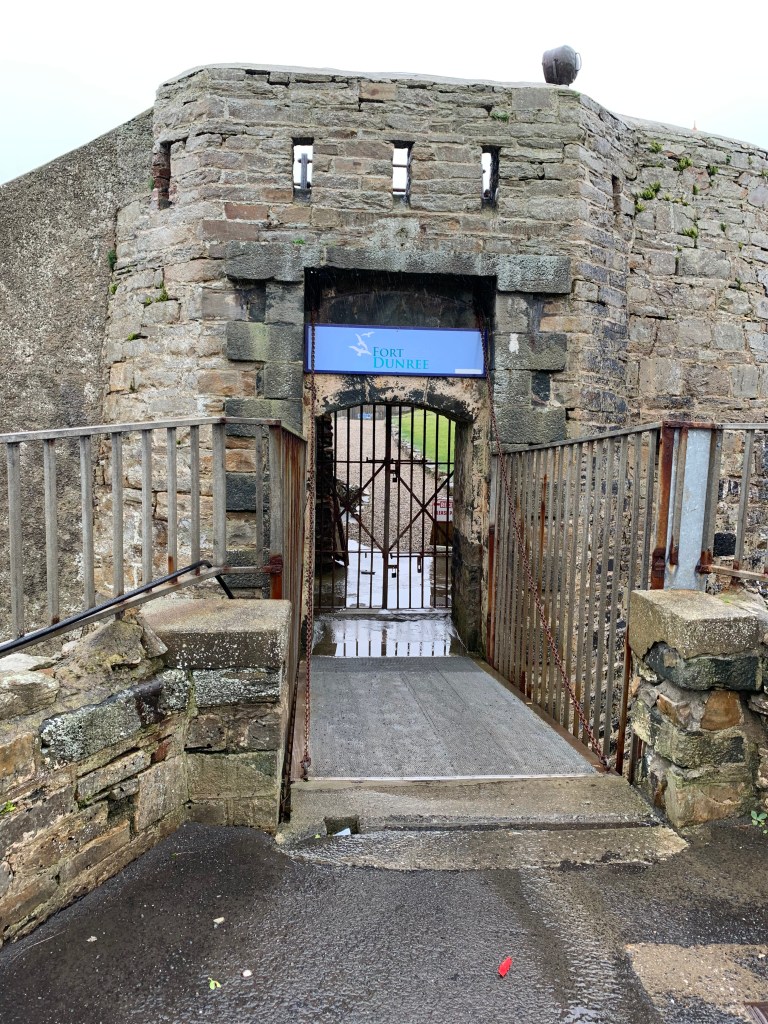
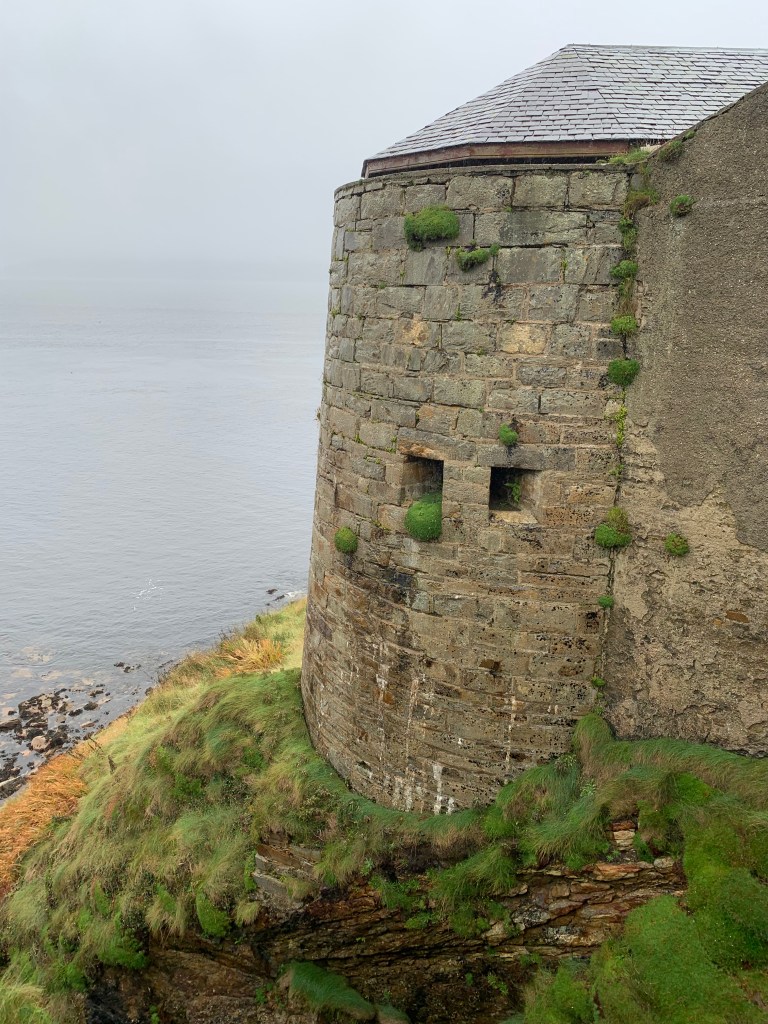
We had a late breakfast at 8am this morning and left Derry by about 9. Today our plan was to visit a number of sights in northwest Ireland in the county of Donegal. We started to head for Dunree Lighthouse on the Lough Swilly, in the Republic of Ireland. What is a Lough Swilly you ask? Its a glacial fjord or sea inlet lying between the western side of the Inishowen Peninsula and the Fanad Peninsula, in County Donegal. Along with Carlingford Lough and Killary Harbour it is one of three glacial fjords in Ireland. The light house was established in 1817, but is not currently operational. We were hoping to walk around it, but the gates were closed. It is located on the same site as Fort Dunree. So we still walked around, in the rain, enjoying the site. The fort is now a military museum with detailed exhibitions, many restored guns. It was originally built as part of a series of fortifications defending Lough Swilly during the Napoleonic Wars.
Our next stop was Fanad Lighthouse on the other side of the lough. But since it required us to drive around the fiord, we decided to visit a few things along the way. Many of these stops were part of the a Wild Atlantic Way stretching Irelands western seaboard, it’s considered the longest defined coastal touring route in the world. Wild Atlantic Way,
- Burt Castle – this was sitting on a hill, and we drove onto private club property to see it. Carol and I jumped out to grab a photo, and heard gunshot so got back in the car quickly. The Castle was constructed in the sixteenth century during the reign of Henry VIII. It was a traditional stronghold of the O’Doherty’s, protecting the southern edge of their Inishowen Lordship. The design of the Castle was strongly influenced by contemporary Scottish fortifications.
- Doe Castle – we saw this Castle from afar. The castle tower is believed to have been built in the 1420s; the walls and two story hall beside the tower in the 1620s. It sits on the waterline of Sheephaven Bay on The Wild Atlantic Way.
- Fanad Lighthouse – This light is classified as a sea light as distinct from a harbour light although it does mark the entrance to Lough Swilly which is a natural harbour of refuge. The original building was commissioned following the Saldanha wreck. Building commenced in 1815 and was completed in 2 years. We were so pleased that it stopped raining while we were here and stayed clear the rest of the day.
To continue our castle tour, we decided to head to Glenveagh National Park to see if we could view the castle there. The only way to see it was on a tour and we chose not to. That being said, the park is a remote and hauntingly beautiful wilderness of rugged mountains, pristine lakes, tumbling waterfalls and enchanted native oak woodland in the heart of the Derryveagh Mountains in the north west of County Donegal. I started calling it the badlands because we saw more brown here than any other place in Ireland. The mountains were quite beautiful.
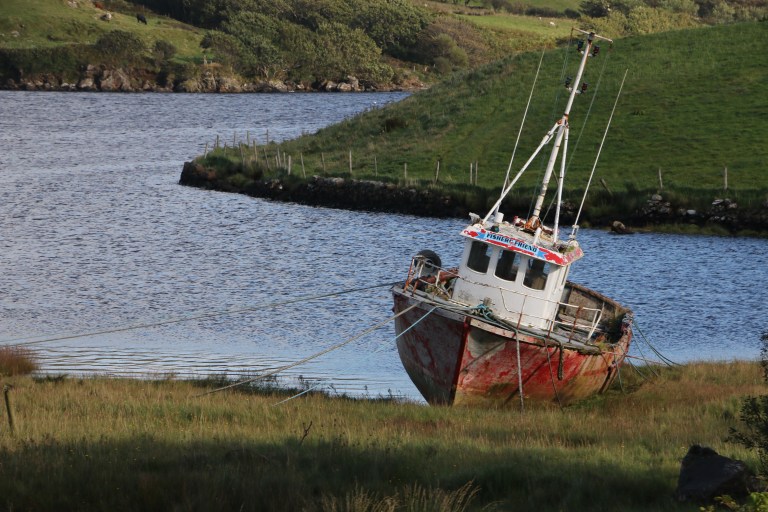
Since we needed to check into our hotel before 6, we chose to go there next. We were there about 15 minutes before heading out again. Our host Sean gave us some recommendations for food in Killybegs, and suggested we See Sliabh Liag or Slieve League since we were heading that direction, and it’s just past Killybegs. I thought Killybegs was a quaint fishing village, with those cute colorful boats. Nope. It was a commercial fishing village. We all wanted some fresh fish/seafood for dinner, but didn’t want to eat from a food truck.
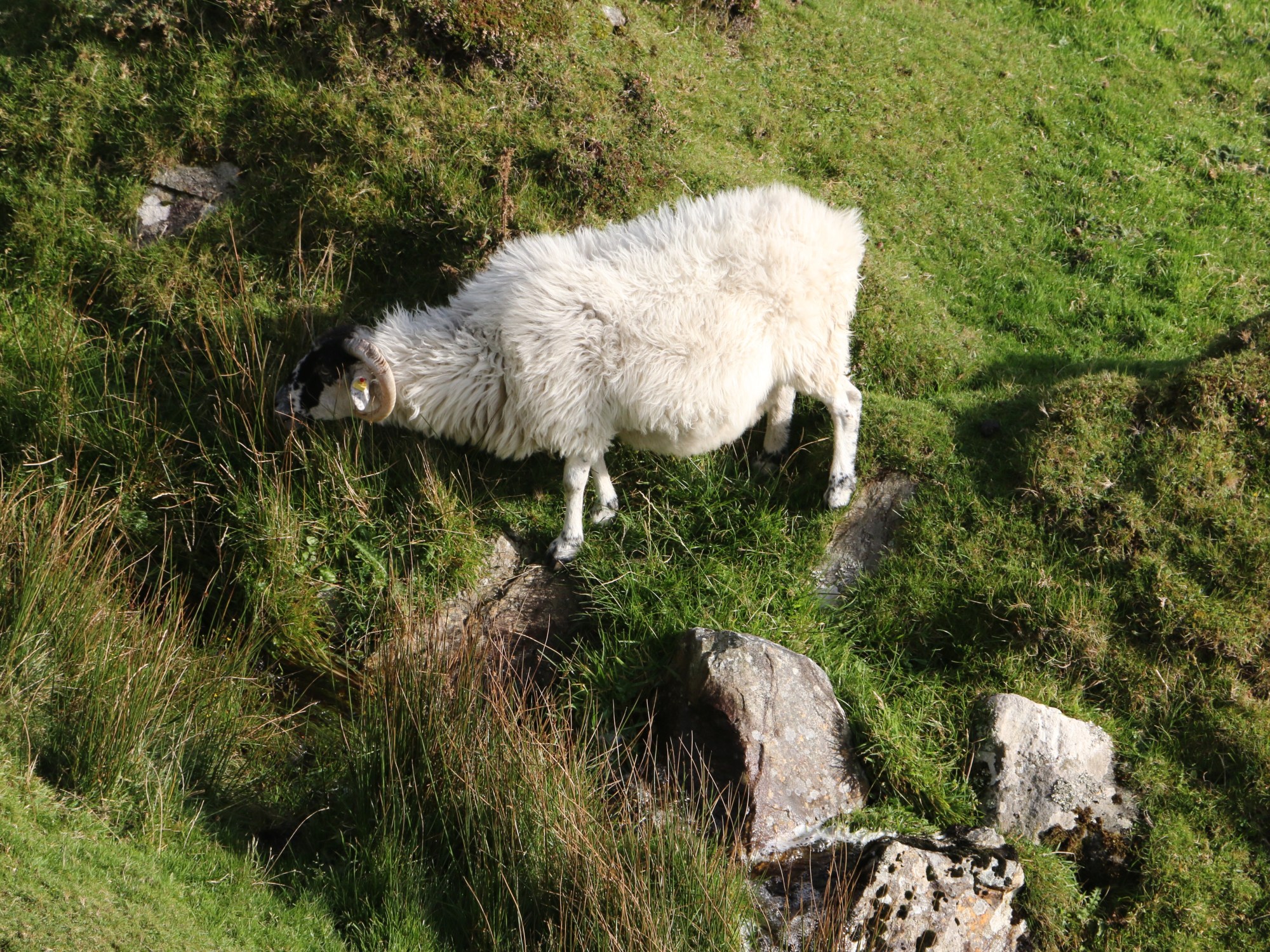
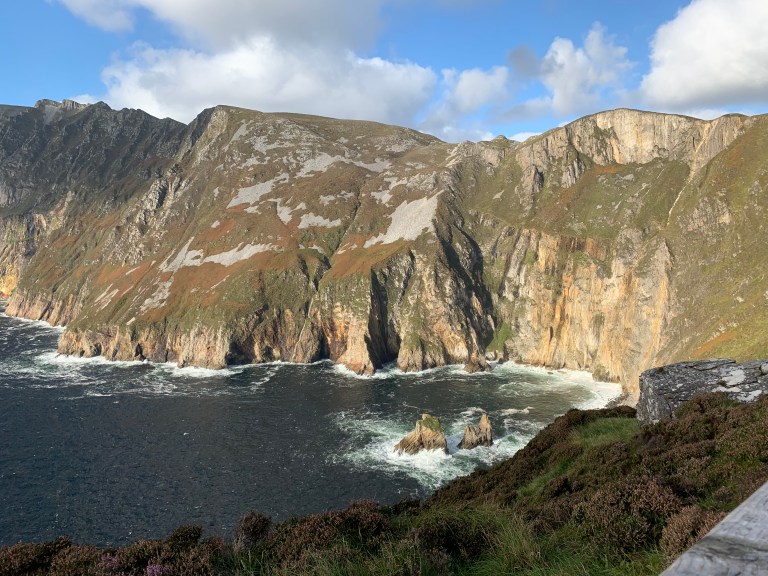
The drive to Slieve was a little longer than expected, but the views along the drive were spectacular. Sean gave us a tip, that we ended up being very grateful for. She told us to drive up to the gate, open it, drive through, and close it. It’s there because livestock runs free and they don’t want them to get out. This was the most surprising find of the day. At 596 metres, it has some of the highest sea cliffs on the island of Ireland. Although less famous than the Cliffs of Moher in County Clare, Slieve League’s cliffs reach almost three times higher. We saw sheep climbing on steep cliffs, a waterfall, and the cliffs reminded us of Kauai and the Nepali coast.
On our way back, we stopped at the Rusty Mackerel for dinner and it did not disappoint. Seafood chowder, fish and chips, seafood platter with hake, sea bass and salmon, finishing with a warm brownie.




 Traveljunkies