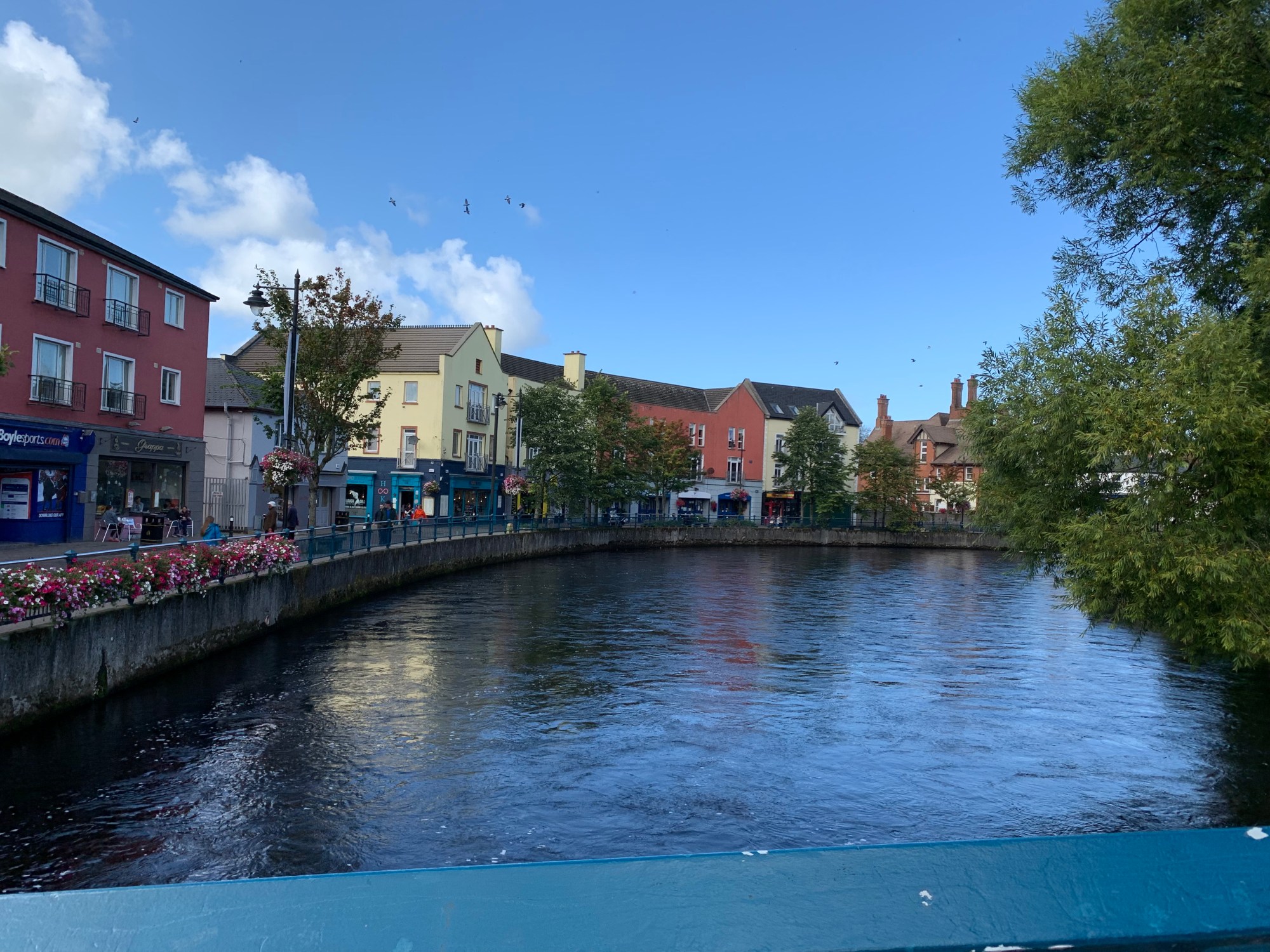
After a traditional Irish breakfast (eggs, bland sausage, bacon that’s really ham, mushrooms, breads, yogurt) we headed to:
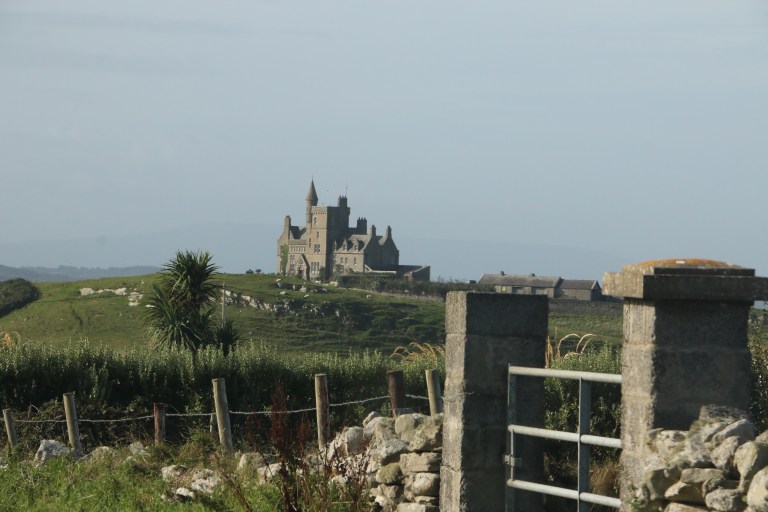
Mullaghmore Peninsula – we wanted to enjoy the coastal route so headed for this area in hopes to also see Classiebawn Castle. Unfortunately the castle is privately owned, so we couldn’t get up close. I did learn later that it was the holiday home of Louis Mountbatten, a member of the British royal family who was assassinated in 1979. We continued past the castle to enjoy the rocky coast. The contrasting colors of black stone, blue Atlantic and the white waves crashing make for a stunning view.
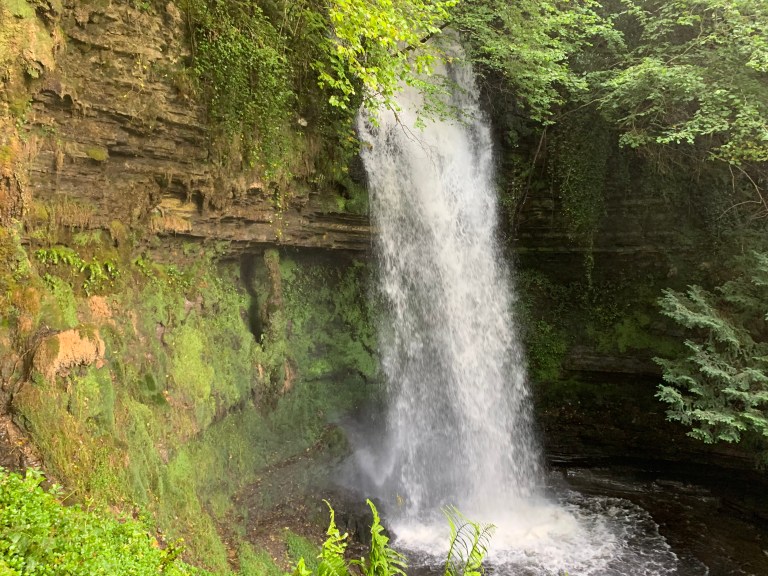
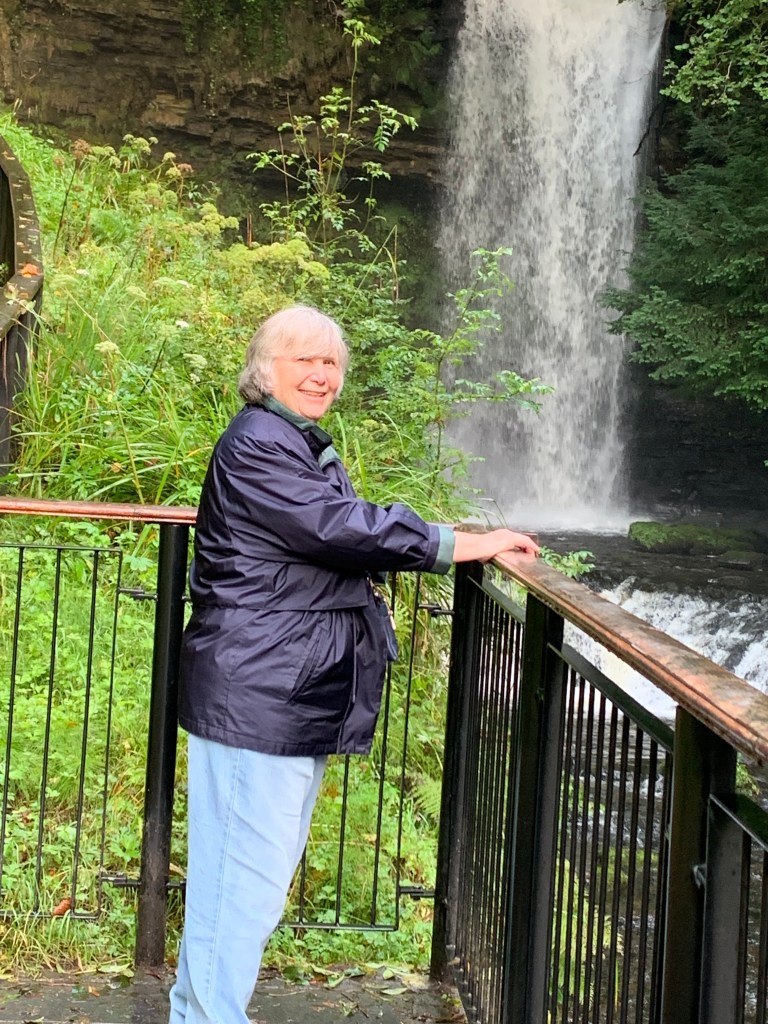
Glencar Waterfall – situated near Glencar Lake, we viewed the waterfall from a lovely wooded walk. This one which is mentioned by WB Yeats poem ‘The Stolen Child’. The drive to and from the falls was almost as beautiful as the falls themselves.
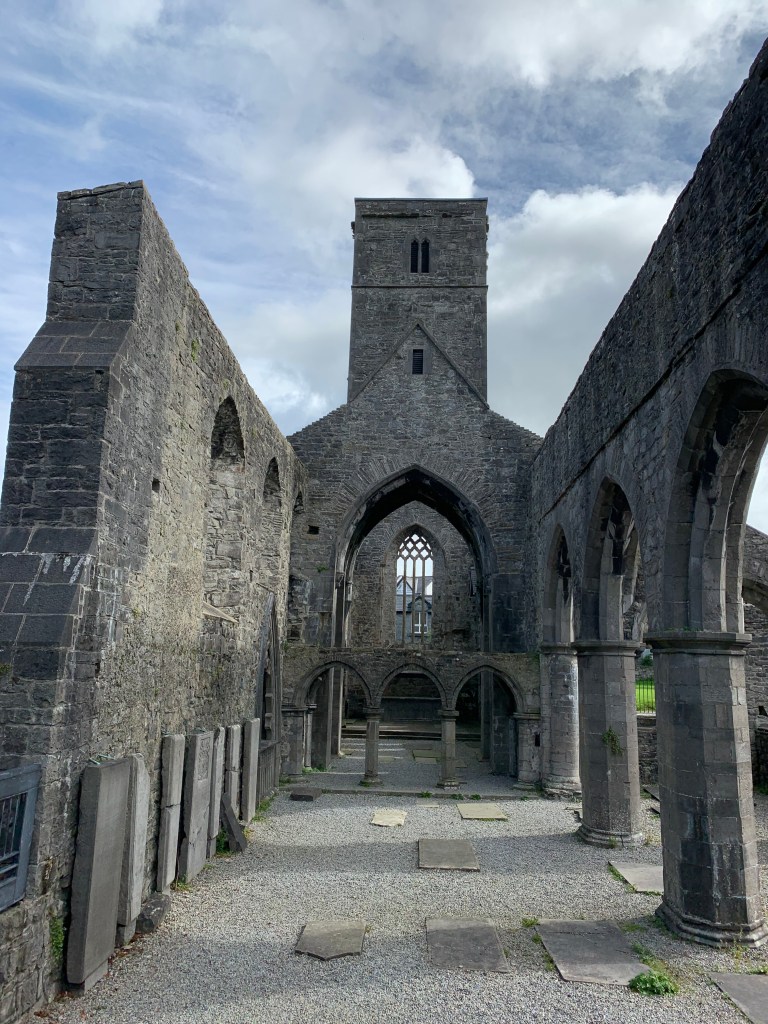
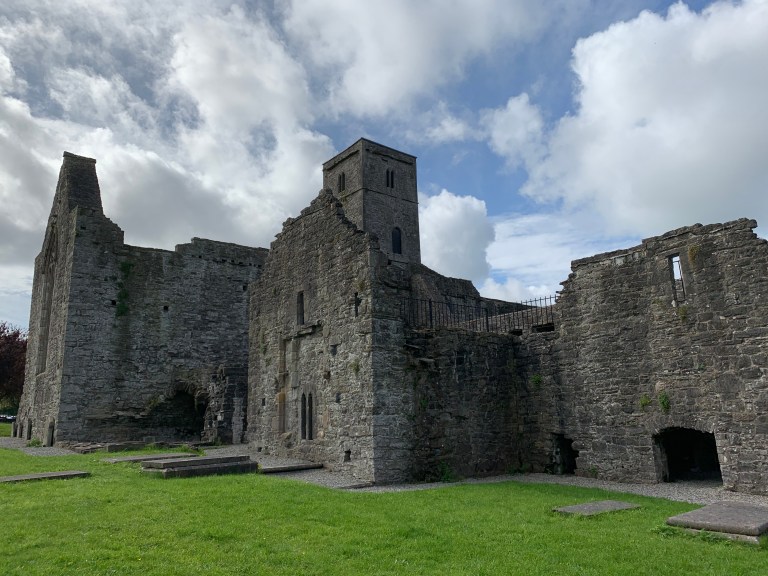
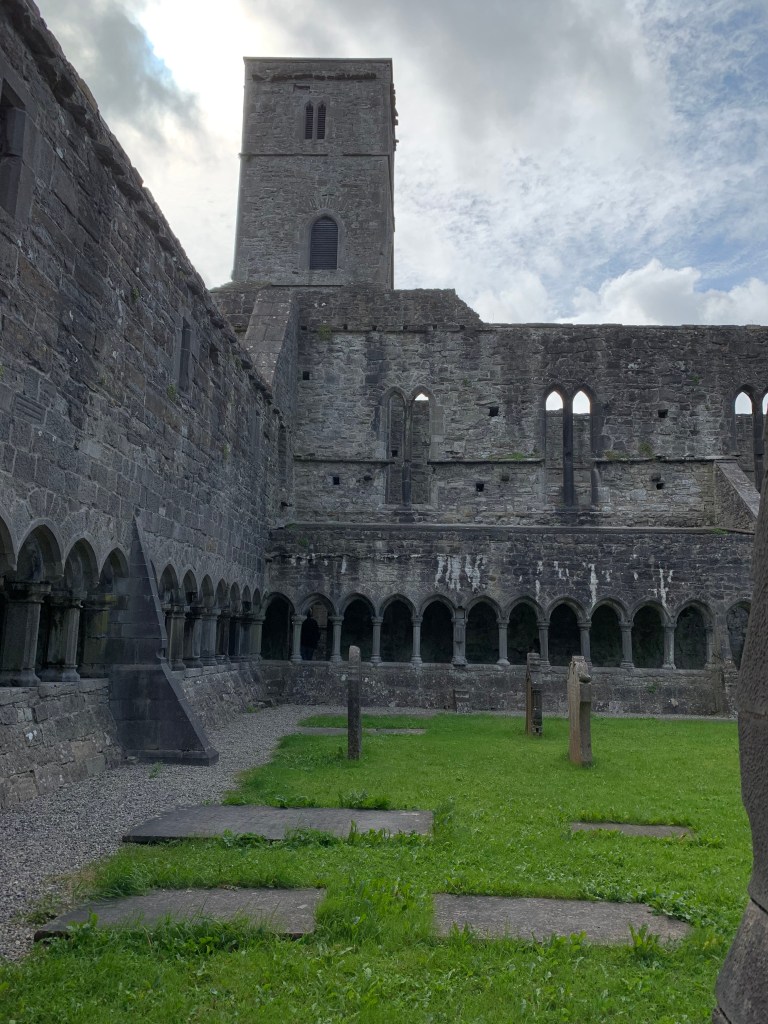
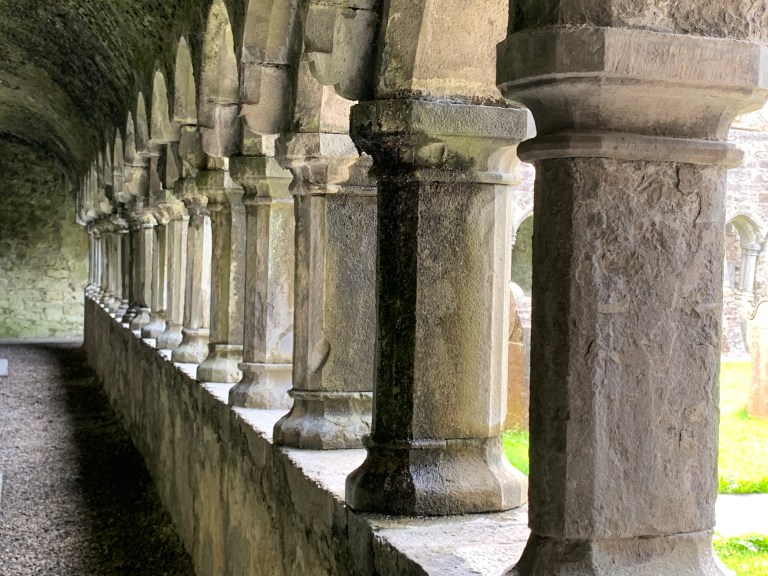
Sligo Abbey – we drove tight into downtown Sligo to see the Ruins of this former Friary. The building was destroyed and rebuilt multiple times. When the friars left the last time it became the towns cemetery, which is why we saw so many graves. The ruins were lovely, and since we had a sunny day, even better.
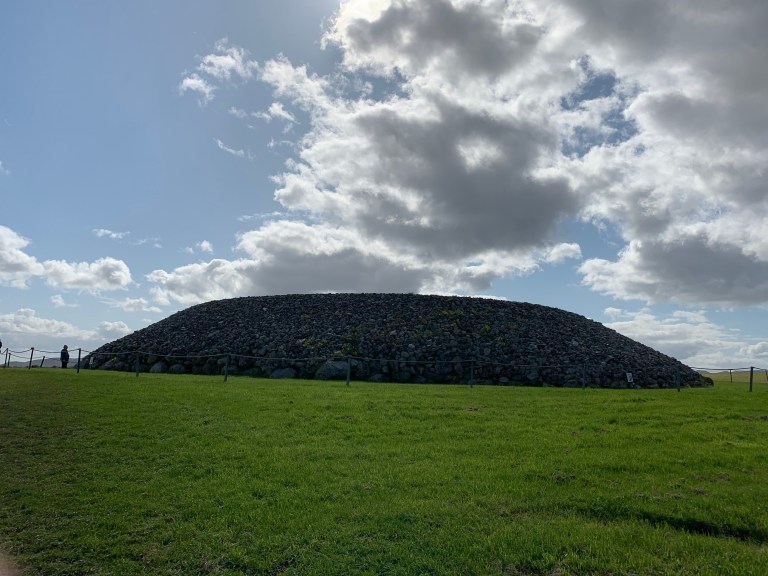
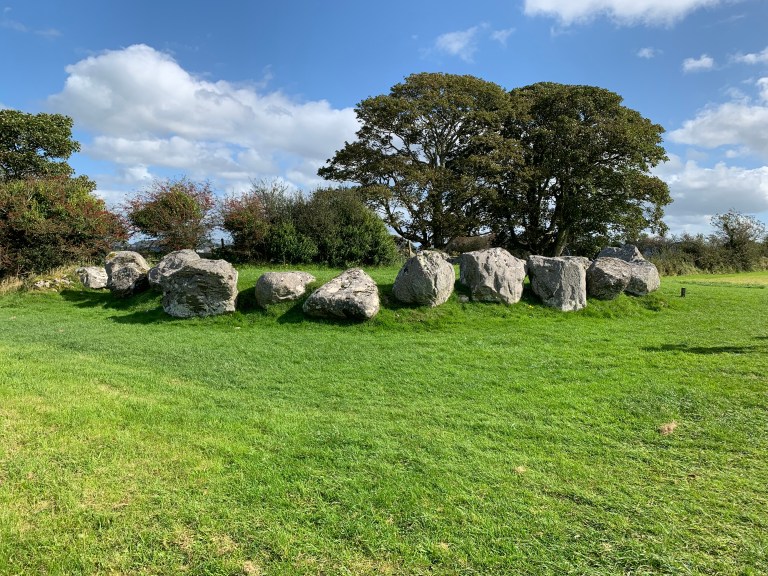
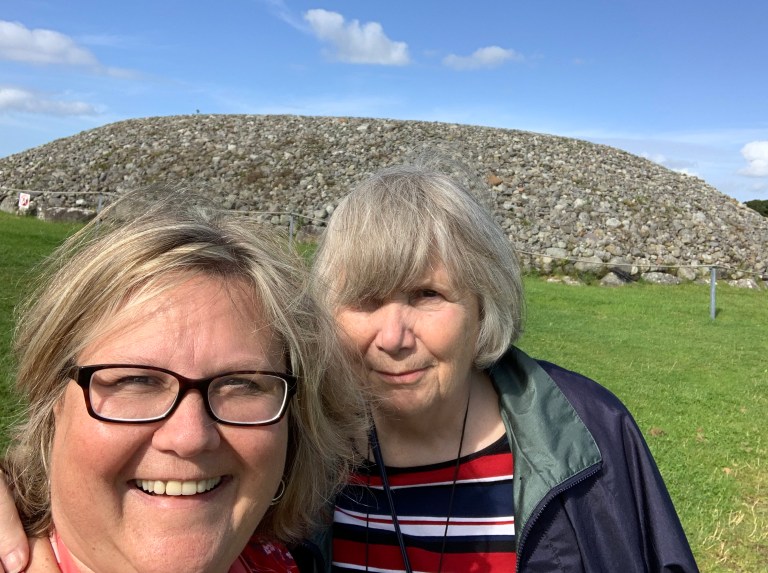
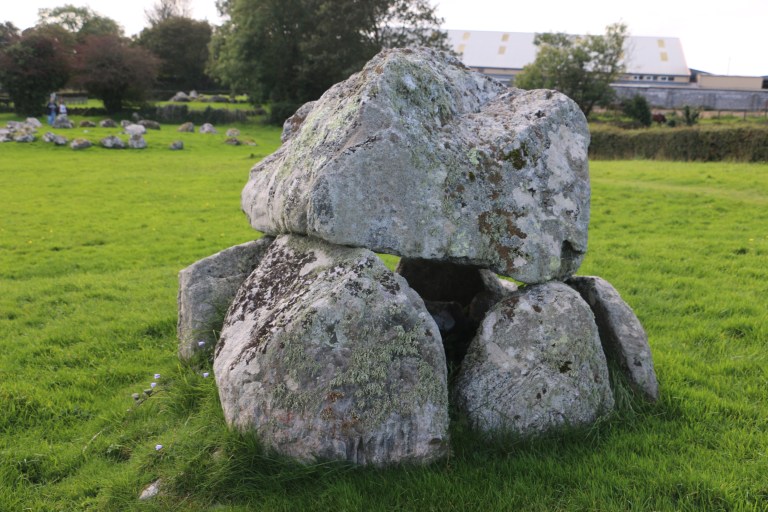
Carrowmore Megalithic Cemetery – this is the largest cemetery of megalithic tombs in Ireland and is also among the country’s oldest, with monuments ranging from 5000-6000 years old. Archaeologists have recorded over 60 tombs of which 30 are visible. A restored cottage houses an exhibition relating to the site. Mom found this very interesting. They found bones, pottery, tools for making fire. Over the years the rocks from the tombs were used by locals to build walls on their property and other things. The largest tomb, #51, is the most important monument of the entire series, both from its magnitude and central situation. A distinguished person must have been entombed in this great cemetery. You could see another similar tomb on another mountains a few miles away.
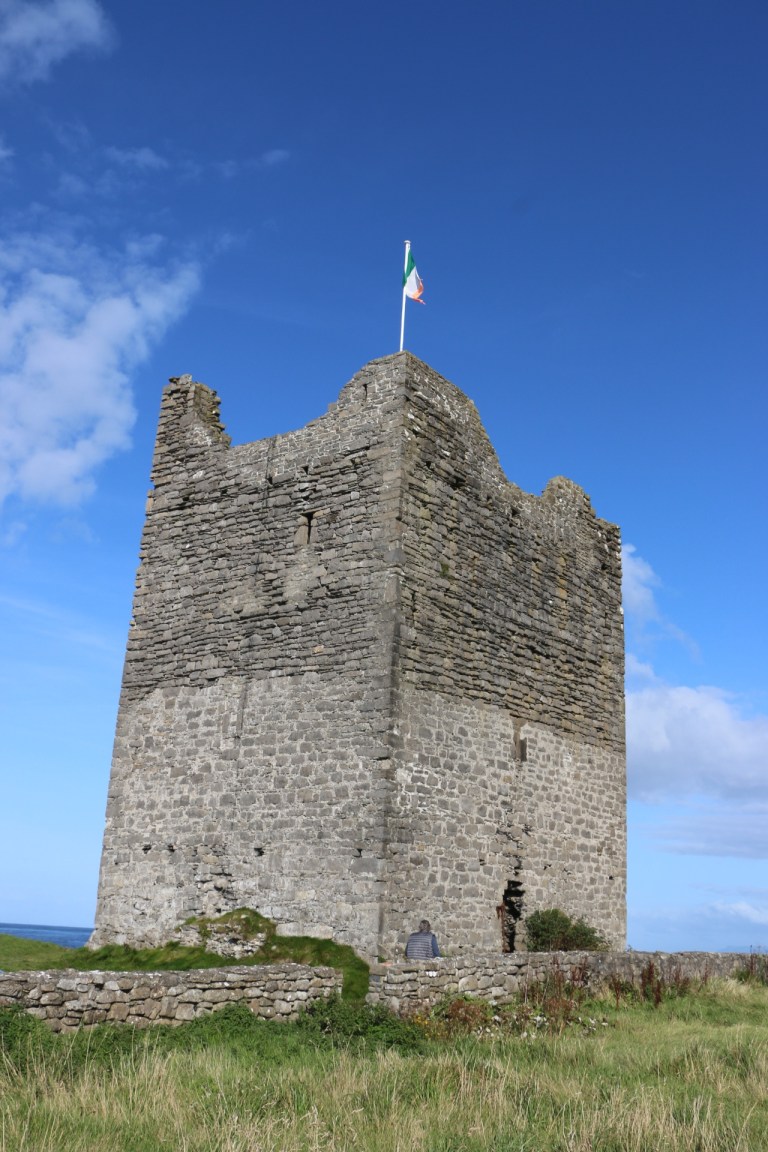
On our way Ballina, where our overnight accommodations are, we drove along the coast again and saw:
- Easty, Roslee Castle and surfers
- Narrow country roads, where only one car could pass
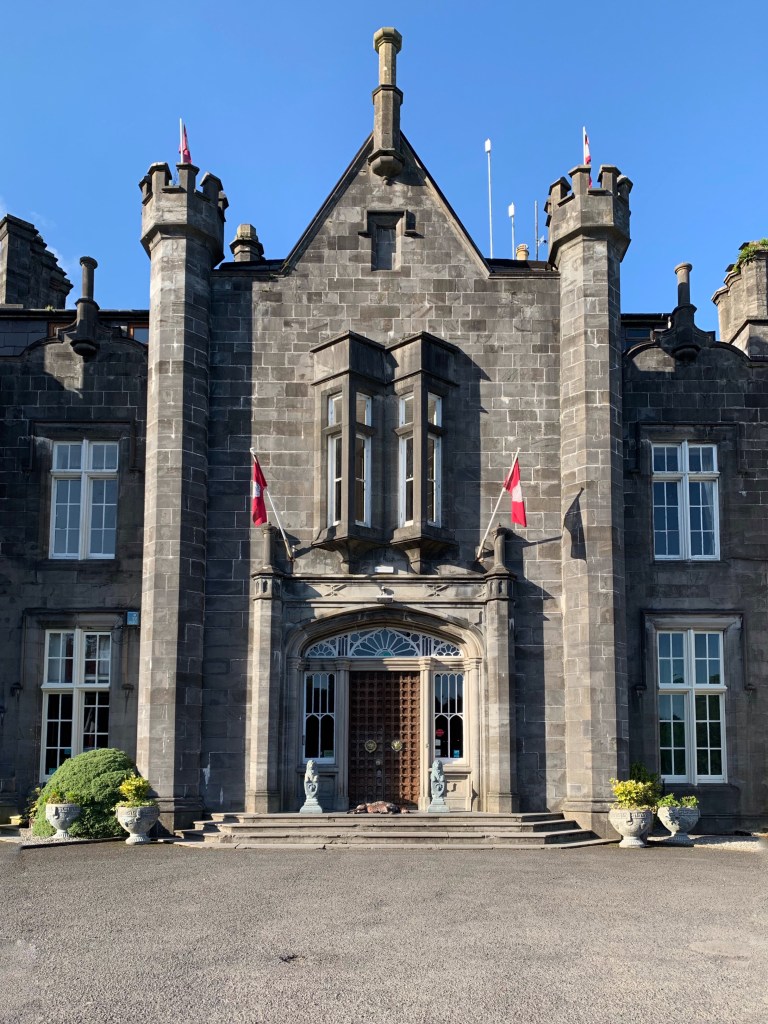
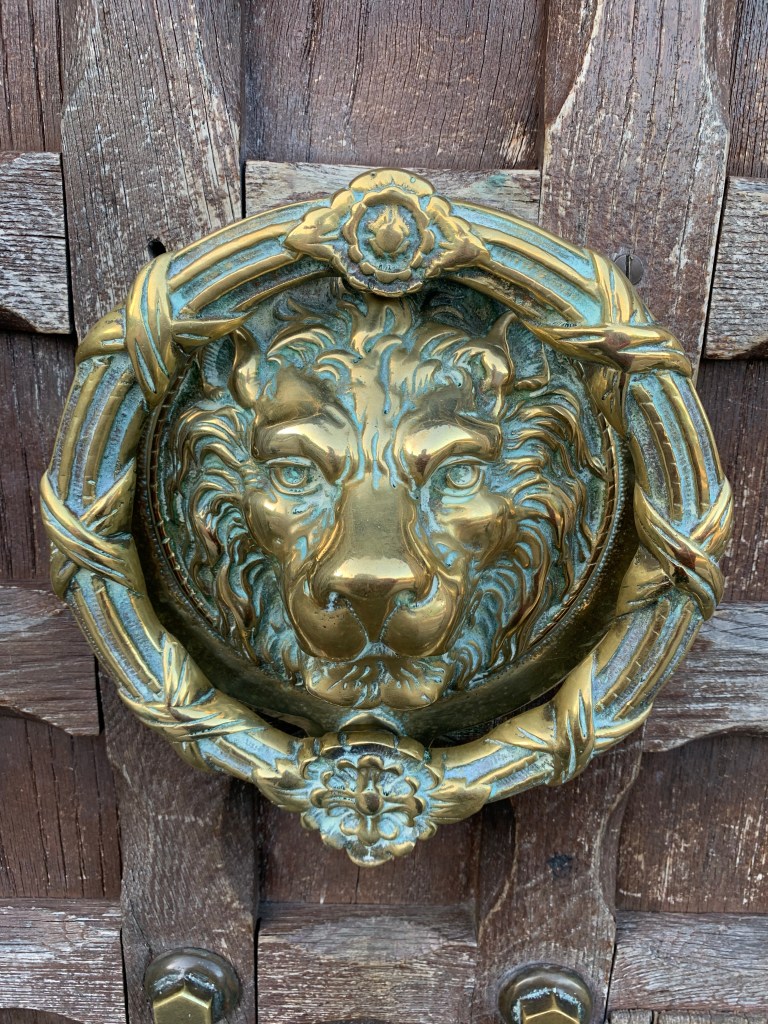
Tonight we are staying in Belleek Castle, which was built between 1825 and finished in 1831 for the cost of £10,000. The building was commissioned by Sir Arthur Francis Knox-Gore. The manor house was designed by the prolific architect John Benjamin Keanes, and the Neo-Gothic architecture met the taste of the time, when Medieval styles became fashionable again. The house is thought to have replaced an earlier structure & is named after the original Belleek Castle, a 13th Tower House Castle situated on the banks of the River Moy.
 Traveljunkies
Great pix !
Great commentary!
Keep ’em coming !