We woke up and saw rain. The forecast was inconsistent – one said it would clear up in the afternoon, the other said rain in afternoon. They were both wrong. It rained all day, except for about 1.5 hours. Most of the time it was a drizzle, until this afternoon, when it rained much harder.
We decided to head to the Kylemore Abbey and the Connemara National Park. We planned to stop at a castle, and then spend time in the afternoon in Galway.
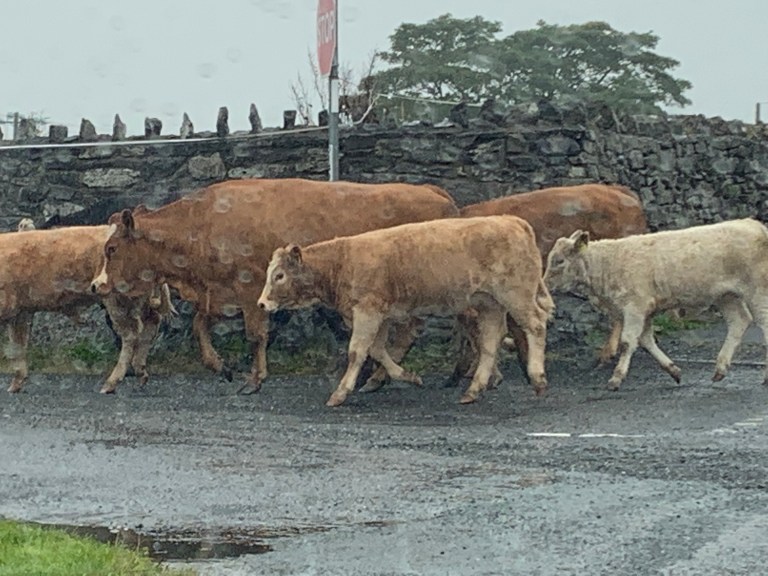
On our drive northwest on N59, which is a major road, I was surprised to see a man flagging us to stop. Then I saw the herd of cows in the road. He was herding them from one field to another field. Fortunately it didn’t take very long. I cracked up today after receiving an email from Loretta Blume today who completely nailed our Ireland driving experience. “I think it takes two people to drive a car in Ireland. One to drive and the other to navigate, every so often reminding the driver “keep left” and the occasional shout, “watch out, sheep crossing the road!” We saw sheep hanging out, crossing and walking in the road today and other days. Lol.
We saw two unusual things today was 1) asylum seeker protest, 2) signs to protect trout and salmon. The protest was because the Department of Justice is in negotiations with the owners of a Connemara hotel to house “less than 250” refugee and asylum seekers there. Some believe introducing pike into waters will be bad for trout and salmon and lead to
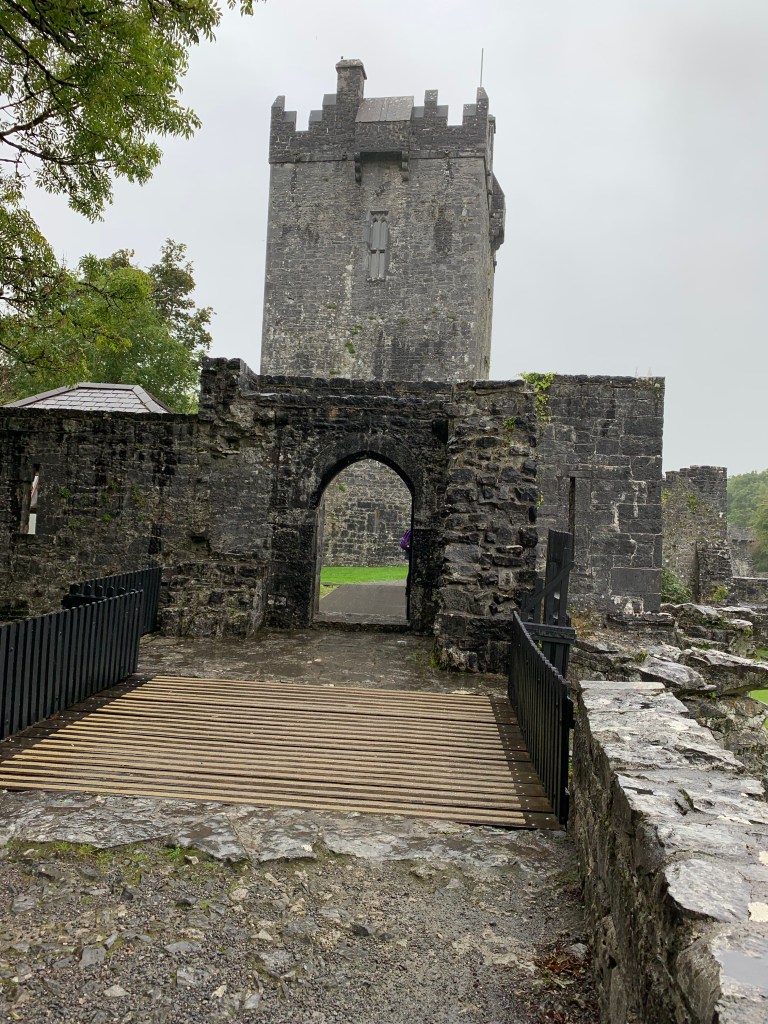
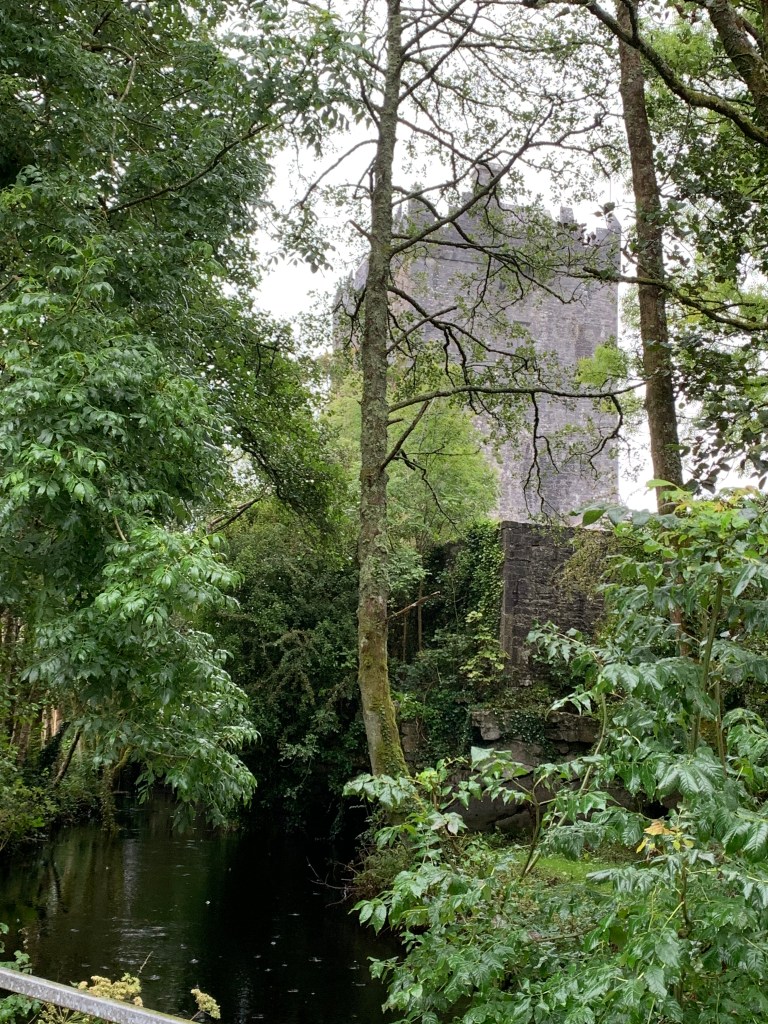
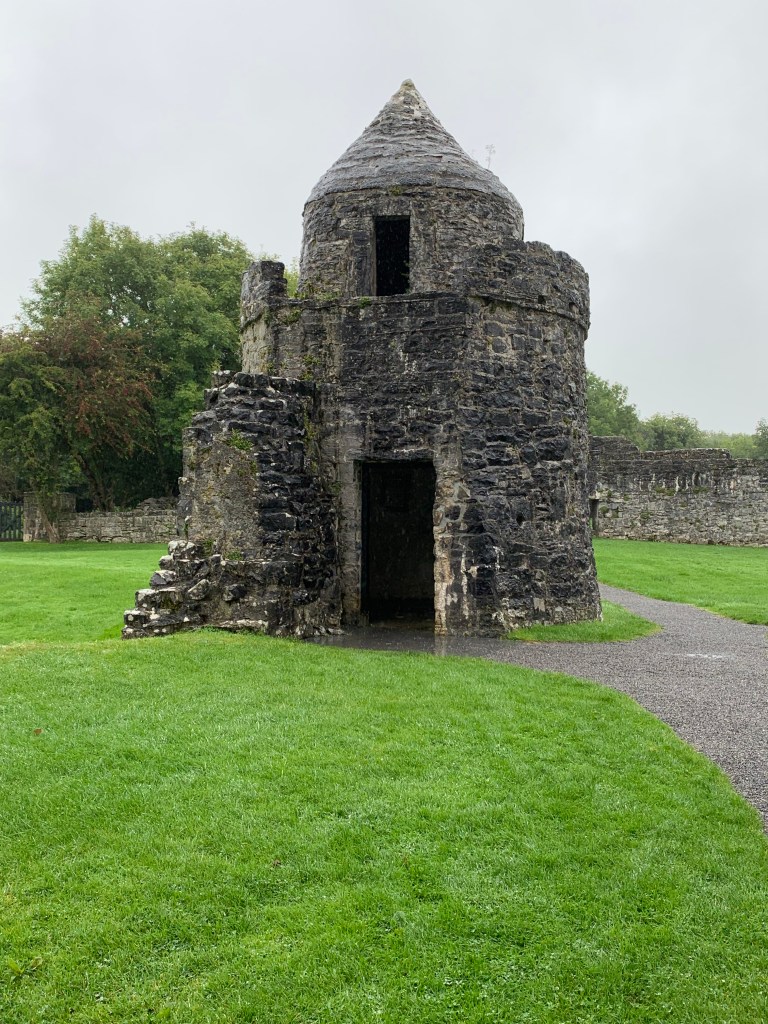
Aughnanure Castle – The castle was built by the O’Flaherty family in the 16th century, one of Connacht’s most notable lord families. Aughnanure is one of over 200 tower houses in County Galway, constructed mainly by Gaelic and Anglo-Norman land owning families. weve seen quite a few of these this week. The tower lies close to the shores of Lough Corrib, and translates to “the field of the yews” in Irish. We got lucky to hear about the castle from a tour guide. The O’Flaherty had over 250,000 acres of land, 10 tower houses and raised cattle primarily. This tower wasn’t used for defense, but primarily used as homes, and a network to control large areas of land. It was impressive for a ruin castle.
Connemara National Park – covers some 2,957 hectares (7300 acres) of scenic mountains, expanses of bogs, heaths, grasslands and woodlands. Some of the park’s mountains, namely Benbaun, Bencullagh, Benbrack and Muckanaght, are part of the famous Twelve Bens or Beanna Beola range. We drove through parts of the park, but didn’t go to the visitors center. It was boring and very similar to Ballycroft.
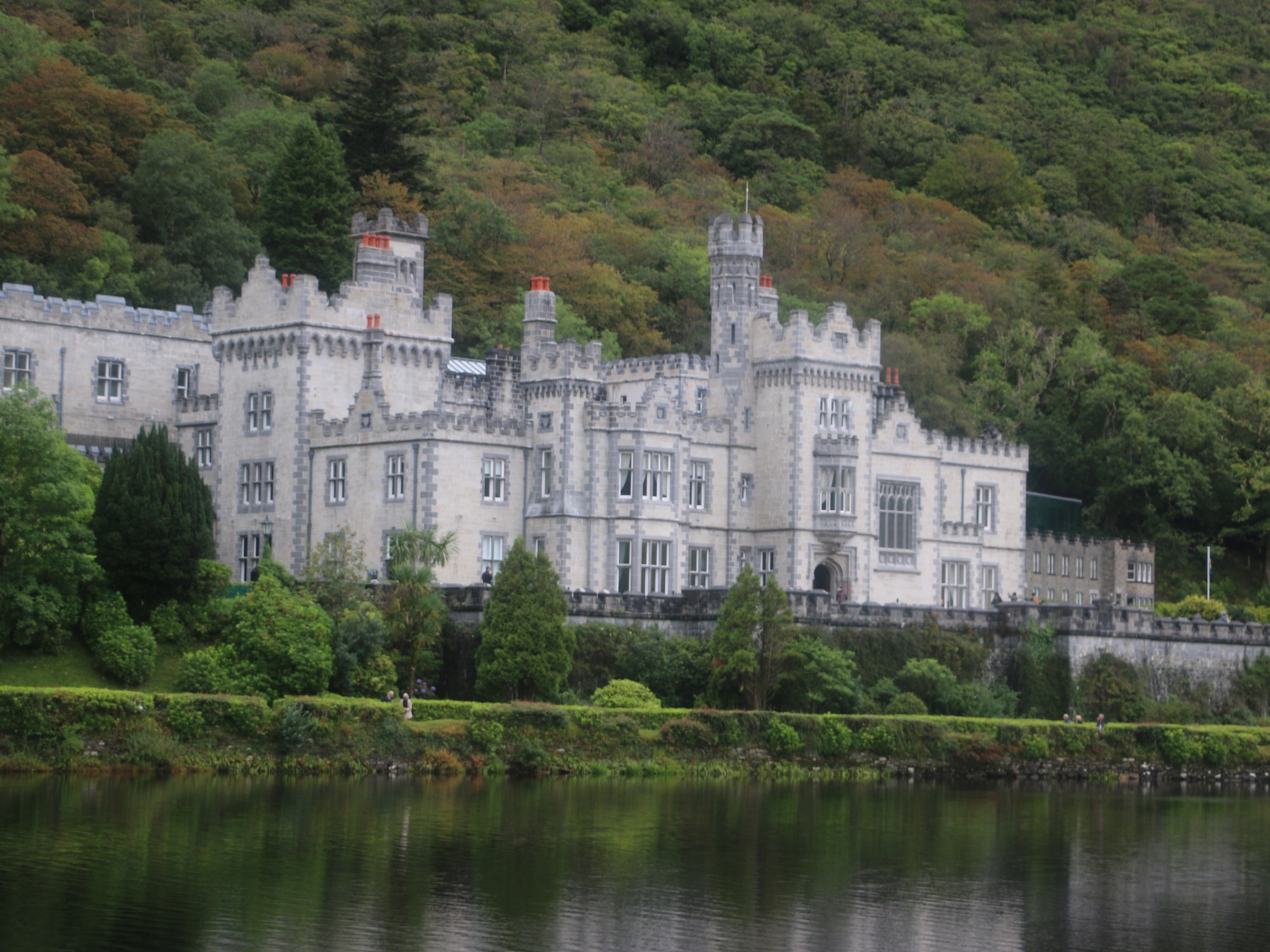
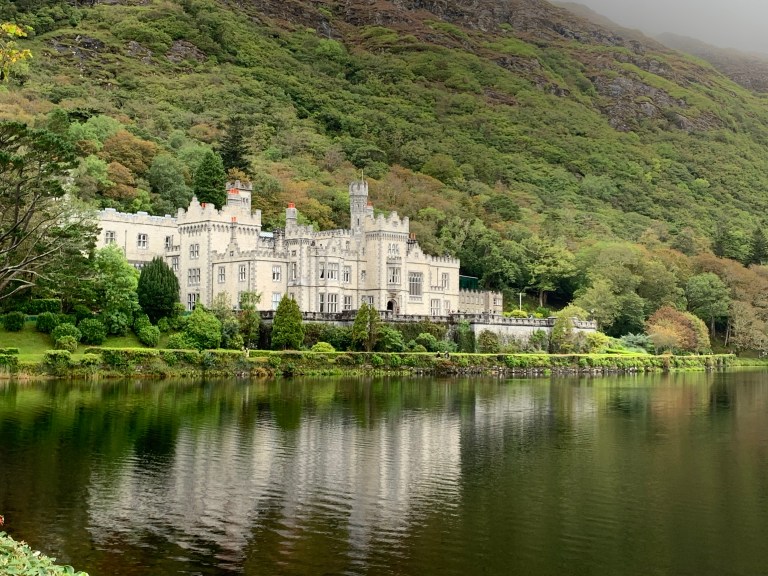
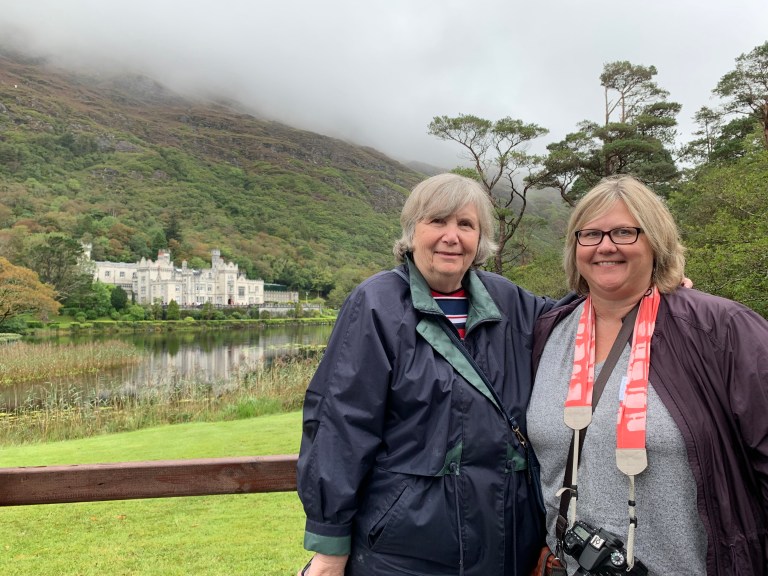
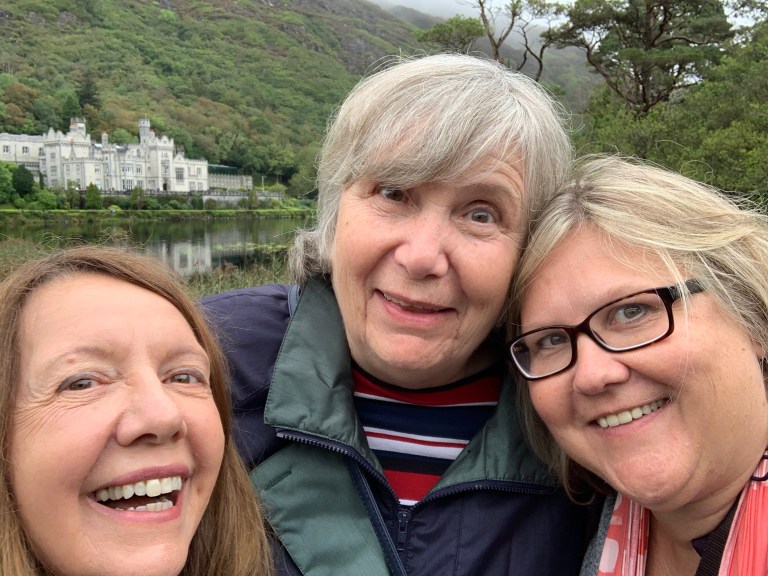
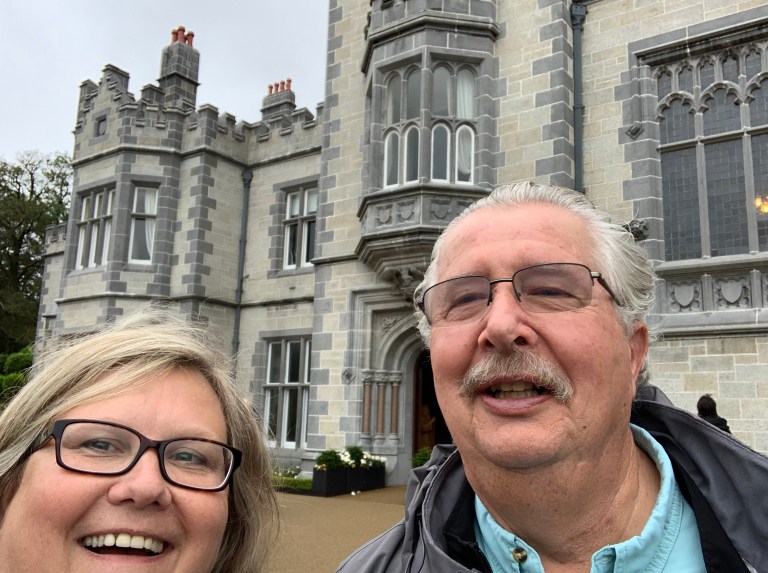
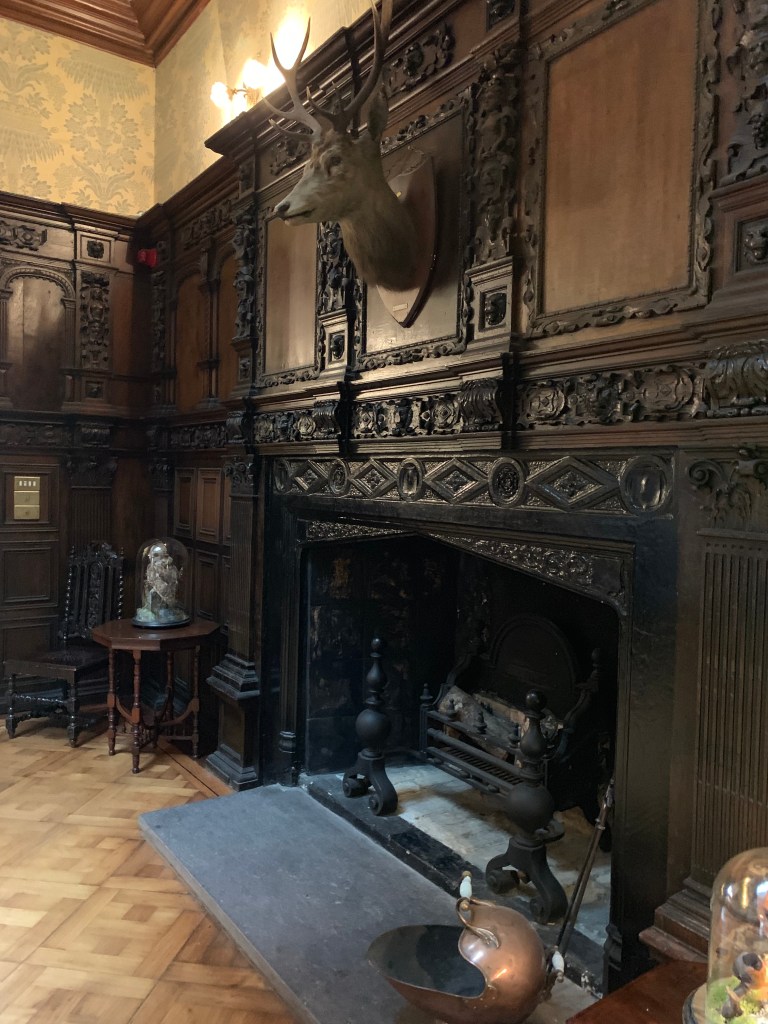
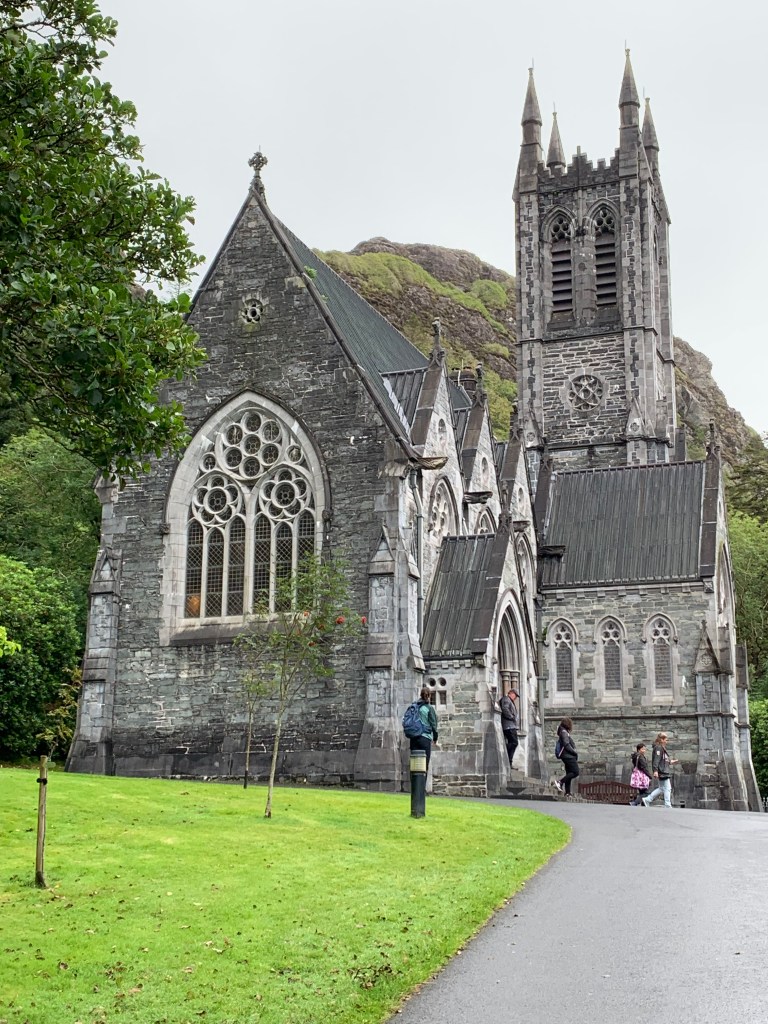
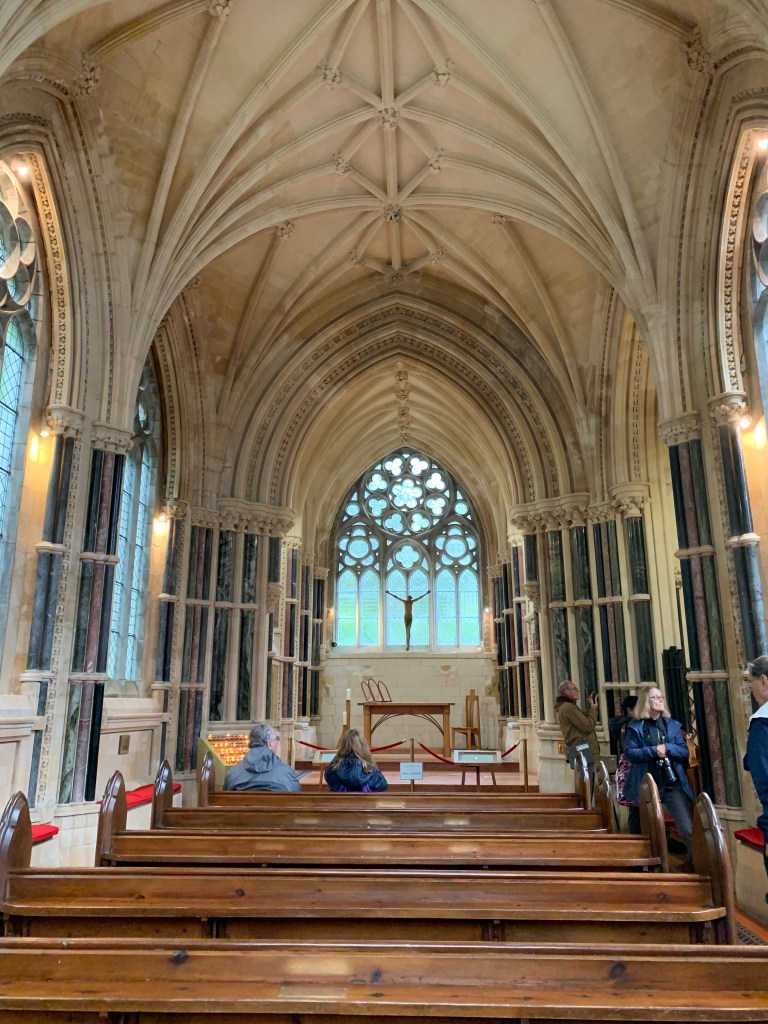
Kylemore Abbey – the drive to the Abbey was long and a little boring in the rain. The road got very winding, bumpy, (the bumps actually added steps to my phone app). We drove over a bridge and there it was, the beautiful castle of Kylemore. Even though there were a number of buses in the parking lot, it didn’t feel crammed. We went to two of the areas – Abbey and the church. Built in 1867 by Mitchell and Margaret Henry and their 9 children. She died 4 years after it was built. She went to Egypt and contracted dysentery. He built a gothic style church on the property and both he and she are buried in a mausoleum. His wealth was deteriorating and so was his political influence, so he sold the house. Eventually the Benedictines bought it, and the nuns started a school there. We were fortunate that the rain stopped while we were here; it was a lovely visit.
On our drive back to Galway, we stopped for lunch in Fough West, and ate at the Boat Inn. It was another good meal. By the time we got to Galway, the rain started coming down hard. We stopped to see:
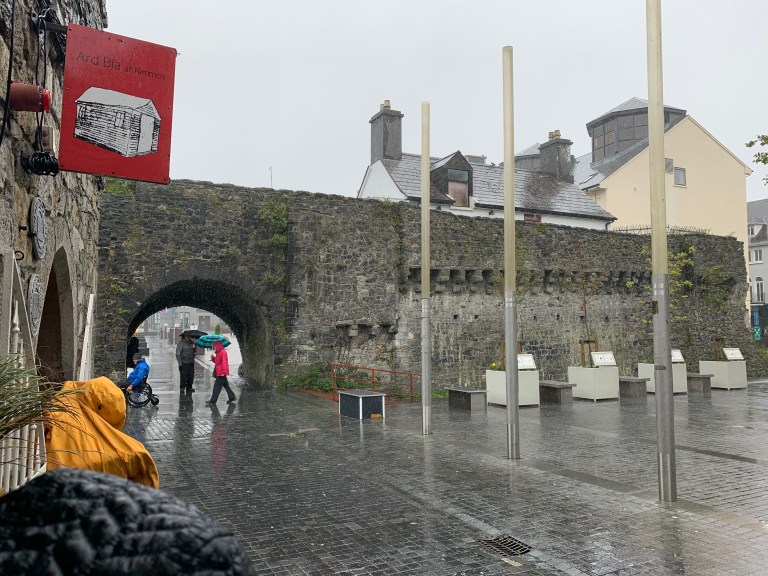
- Spanish Arch
- Drive through the Quay, but it was too wet for shopping
- Mutton Island – we skipped this also because of rain
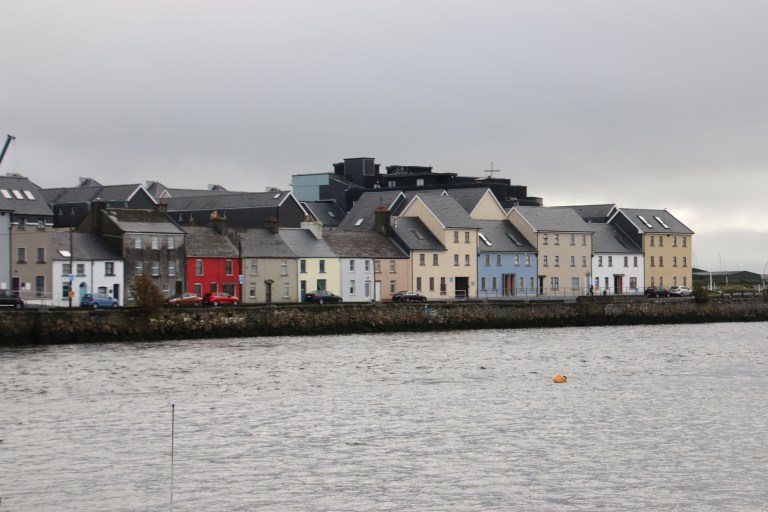
- Colorful houses on the water
We attempted to both dry out, and nap after our busy day. We had a lovely dinner at a place Tiffany and Pete recommended The John Keough. Three of us ordered mussels, and George had fish and chips. Delicious!
Tomorrow we head to the Cliffs of Moher.

 Traveljunkies